

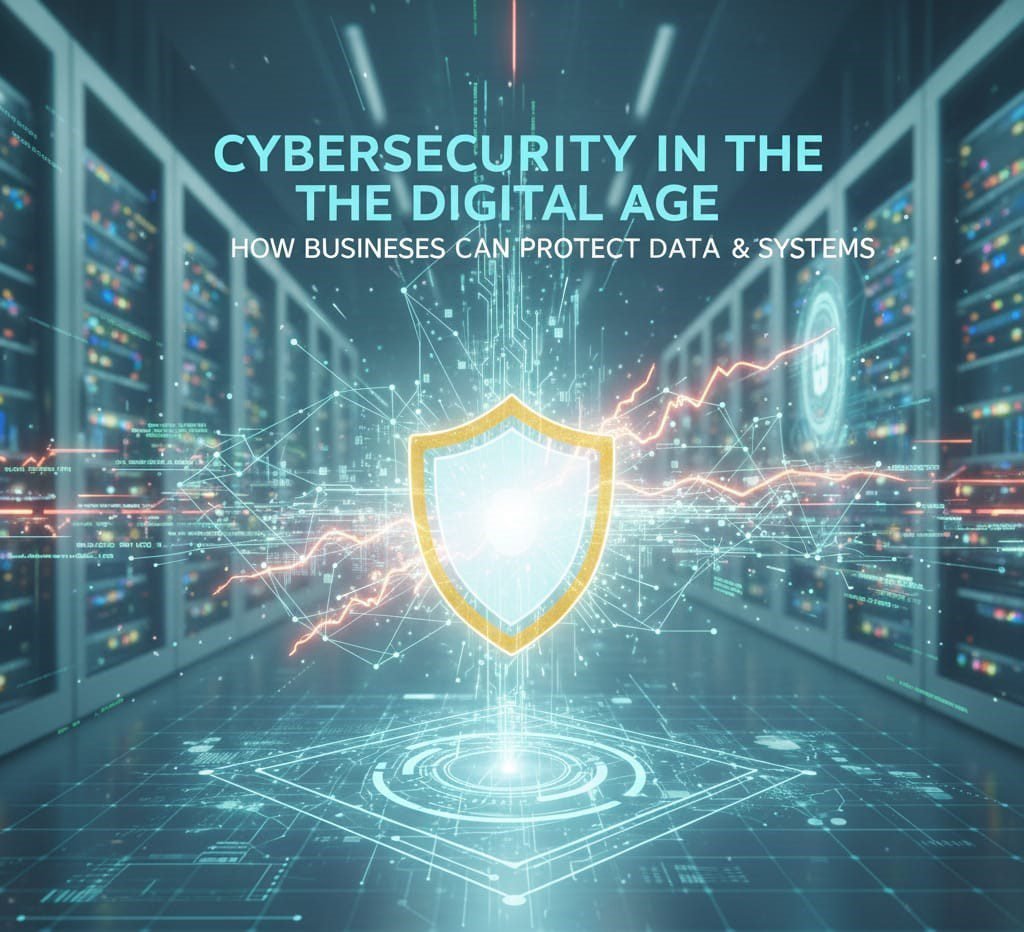
In an era where businesses rely heavily on digital platforms, cloud systems, and online transactions, cybersecurity has become one of the most critical concerns for organizations of all sizes. Cyberattacks are no longer limited to large corporations — small and medium businesses are increasingly becoming targets.
🚨 A single security breach can lead to financial loss, legal consequences, and permanent damage to brand reputation.
This blog explores modern cybersecurity concepts, threats, solutions, and best practices that every business must understand to stay secure in the digital age.
📌 What Is Cybersecurity?
Cybersecurity refers to the practice of protecting systems, networks, applications, and data from digital attacks.
🛡️ Core goals of cybersecurity:
- Confidentiality
- Integrity
- Availability
💡 Cybersecurity ensures that sensitive data remains safe and accessible only to authorized users.
🚀 Why Cybersecurity Is More Important Than Ever
The rapid growth of digital transformation has expanded the attack surface for cybercriminals.
📊 Key reasons cybersecurity matters:
- Rise in remote work
- Increased cloud adoption
- Growth of IoT devices
- Online payments & digital identities
🔐 Cybersecurity is now a business survival requirement, not just an IT issue.
⚠️ Common Cyber Threats Businesses Face
Understanding threats is the first step toward prevention.
🦠 1. Malware Attacks
Malicious software designed to damage or steal data.
Examples:
- Viruses
- Trojans
- Spyware
- Ransomware
💥 Ransomware attacks can lock entire systems until a ransom is paid.
🎣 2. Phishing Attacks
Fake emails or messages that trick users into revealing sensitive information.
Warning signs:
- Suspicious links
- Urgent language
- Unknown senders
📌 Human error is one of the biggest security vulnerabilities.
🔓 3. Data Breaches
Unauthorized access to confidential data.
Consequences:
- Financial loss
- Legal penalties
- Loss of customer trust
🌐 4. DDoS Attacks
Overloading servers to crash websites or systems.
💡 These attacks disrupt business operations and online services.
🏢 Cybersecurity Solutions for Modern Businesses
Businesses must adopt layered security strategies.
🔐 1. Network Security
Protects internal systems from unauthorized access.
Best practices:
- Firewalls
- Secure VPNs
- Intrusion detection systems
🔑 2. Endpoint Security
Secures devices like laptops, mobiles, and servers.
Tools include:
- Antivirus software
- Device encryption
- Remote wipe capabilities
☁️ 3. Cloud Security
Protects cloud-hosted data and applications.
Key measures:
- Secure access controls
- Encryption
- Regular audits
- Compliance monitoring
🧠 4. Identity & Access Management (IAM)
Controls who can access systems and data.
Techniques:
- Multi-factor authentication (MFA)
- Role-based access
- Biometric verification
🔒 Strong access control reduces insider threats.
👨💼 The Role of Employees in Cybersecurity
Technology alone cannot prevent cyberattacks.
🎯 Employee responsibilities:
- Recognize phishing attempts
- Use strong passwords
- Follow security policies
- Avoid unsafe websites
📘 Cybersecurity awareness training is essential.
⚙️ Cybersecurity & Modern Technologies
Emerging technologies introduce new risks and solutions.
🤖 AI in Cybersecurity
AI helps detect threats faster.
AI advantages:
- Real-time monitoring
- Predictive threat analysis
- Automated incident response
🌐 IoT Security
Connected devices increase vulnerability.
IoT security strategies:
- Secure firmware updates
- Network segmentation
- Strong authentication
🔗 Blockchain for Security
Blockchain enhances data integrity and transparency.
📌 Blockchain reduces tampering and fraud risks.
⚖️ Cybersecurity Compliance & Regulations
Businesses must comply with data protection laws.
📜 Common regulations:
- GDPR
- HIPAA
- ISO 27001
- PCI-DSS
💡 Compliance avoids legal penalties and improves trust.
📉 Challenges in Cybersecurity Implementation
Despite awareness, businesses face challenges.
🚧 Common obstacles:
- Budget constraints
- Lack of skilled professionals
- Complex security systems
- Rapidly evolving threats
🎯 Strategic planning helps overcome these challenges.
🔮 Future of Cybersecurity
Cybersecurity will continue to evolve.
🚀 Future trends:
- Zero Trust security models
- AI-driven security platforms
- Automated threat response
- Privacy-focused systems
🔐 Proactive security will replace reactive approaches.
🧠 How Businesses Can Build a Strong Cybersecurity Strategy
✅ Actionable steps:
- Conduct risk assessments
- Implement layered security
- Train employees regularly
- Monitor systems continuously
- Create incident response plans
📈 Prepared businesses recover faster from attacks.
🏁 Conclusion
Cybersecurity is no longer optional in the digital age. With increasing cyber threats, businesses must take proactive steps to protect their data, systems, and customers.
💡 Strong cybersecurity builds trust, ensures continuity, and supports long-term growth.
By investing in the right tools, training, and strategies, businesses can confidently navigate the digital world.